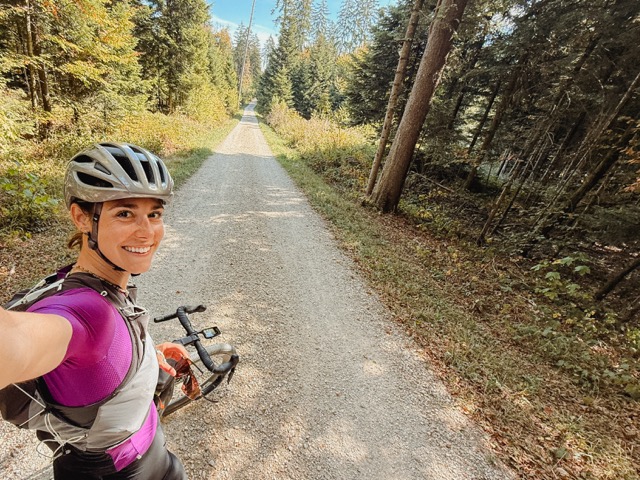
Sundgau, the Alsace nobody talks about
GPX tracks at the end of the article
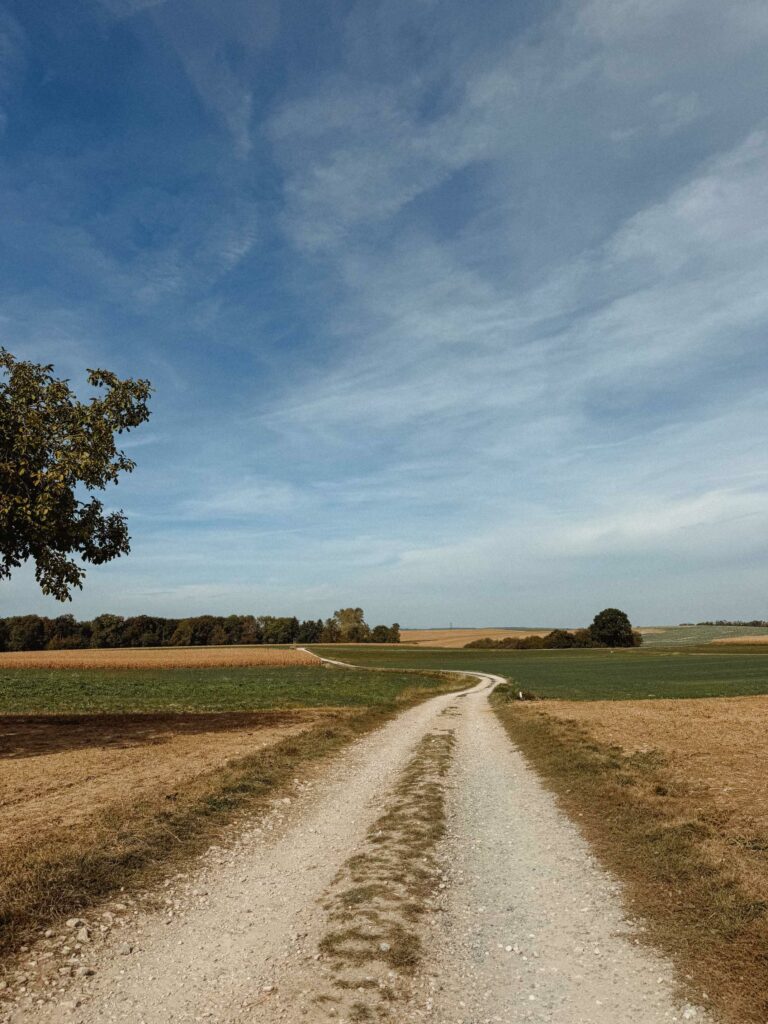
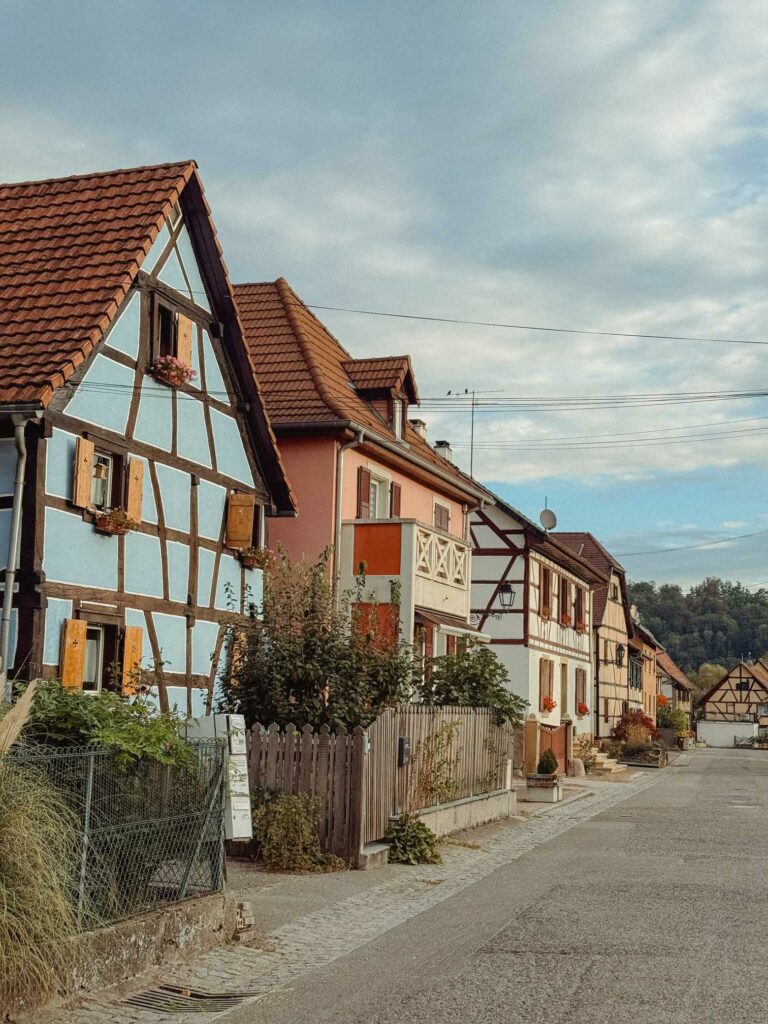
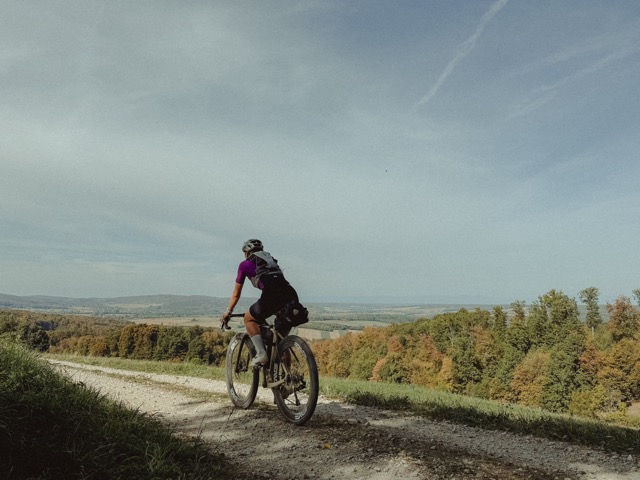
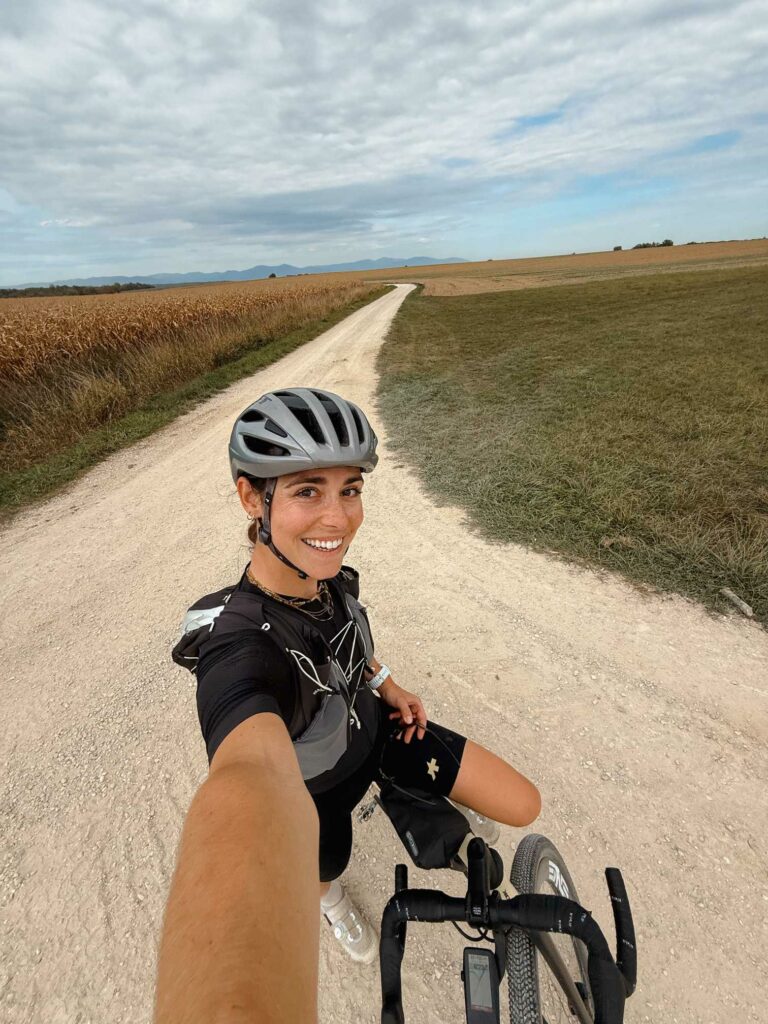
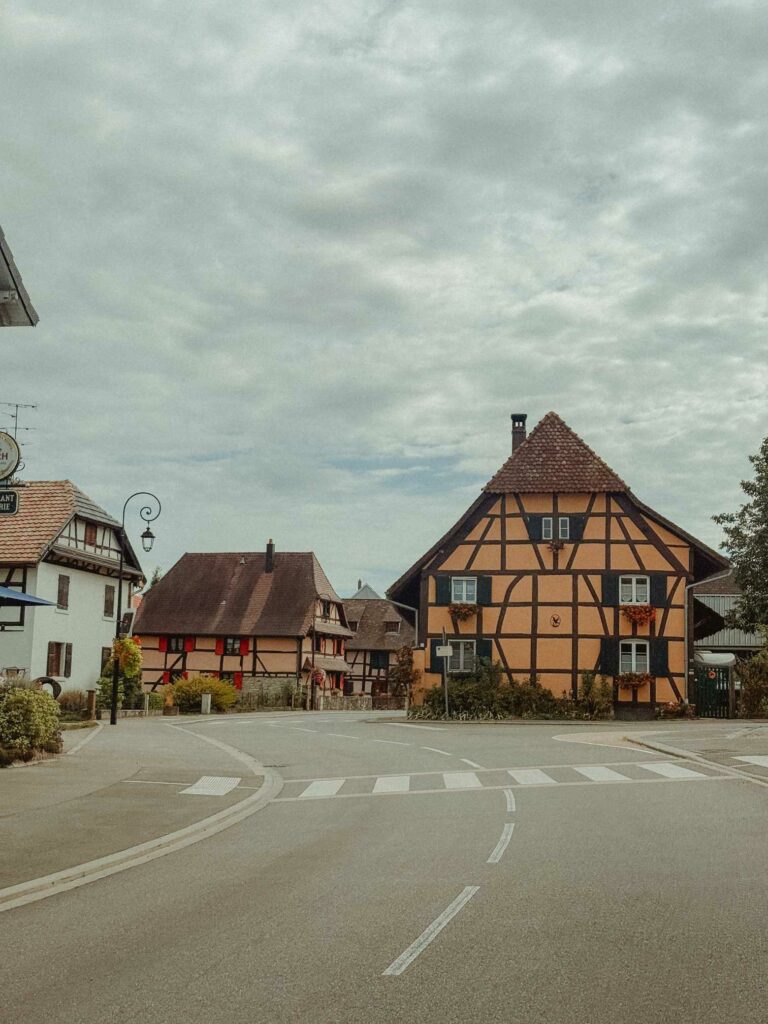
When people think of Alsace, they think of the Wine Route, Strasbourg, Colmar. Hardly ever the Sundgau. And yet, right at the southern tip of the Haut-Rhin, tucked up against Switzerland, there’s a little corner that has everything you could want on a gravel bike: white gravel tracks as far as the eye can see, villages full of half-timbered houses, and back roads where you’ll pass more tractors than cars.
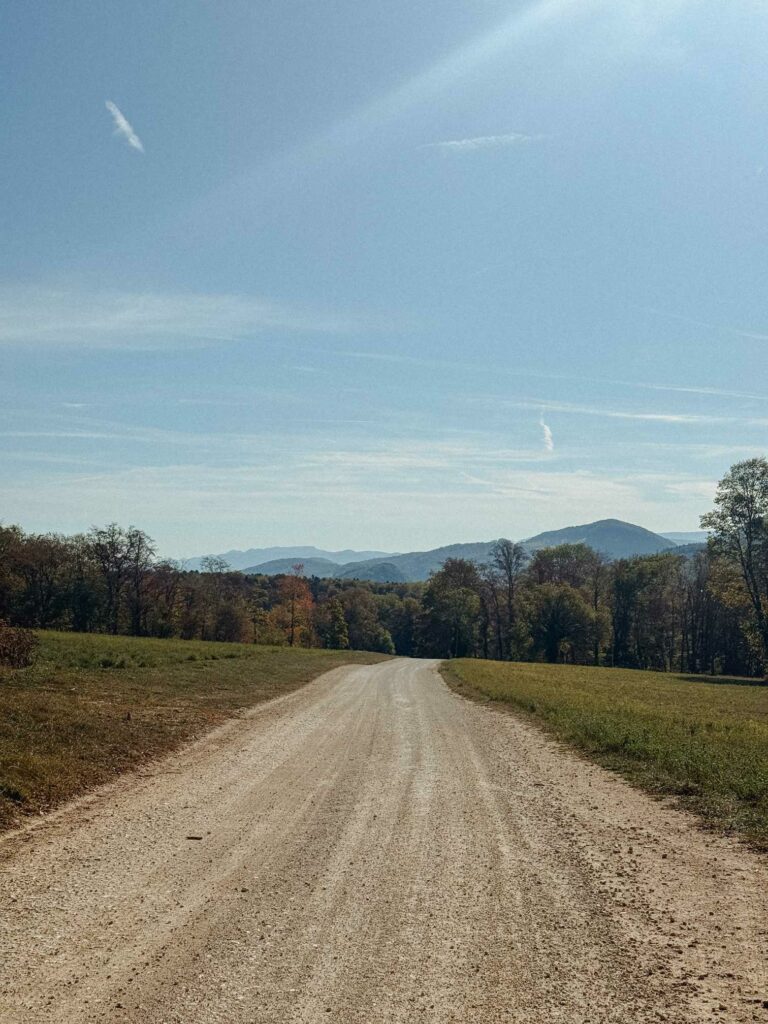
All around, three mountain ranges close off the horizon: the Vosges, the Black Forest on the German side, and the Jura, whose French part goes by a lovely name here, the Alsatian Jura.
I spent two days riding a loop around this hugely underrated gravel spot. Starting and finishing in Ferrette, with a detour into Switzerland, plenty of history and more villages than I could count. Here’s how it went.
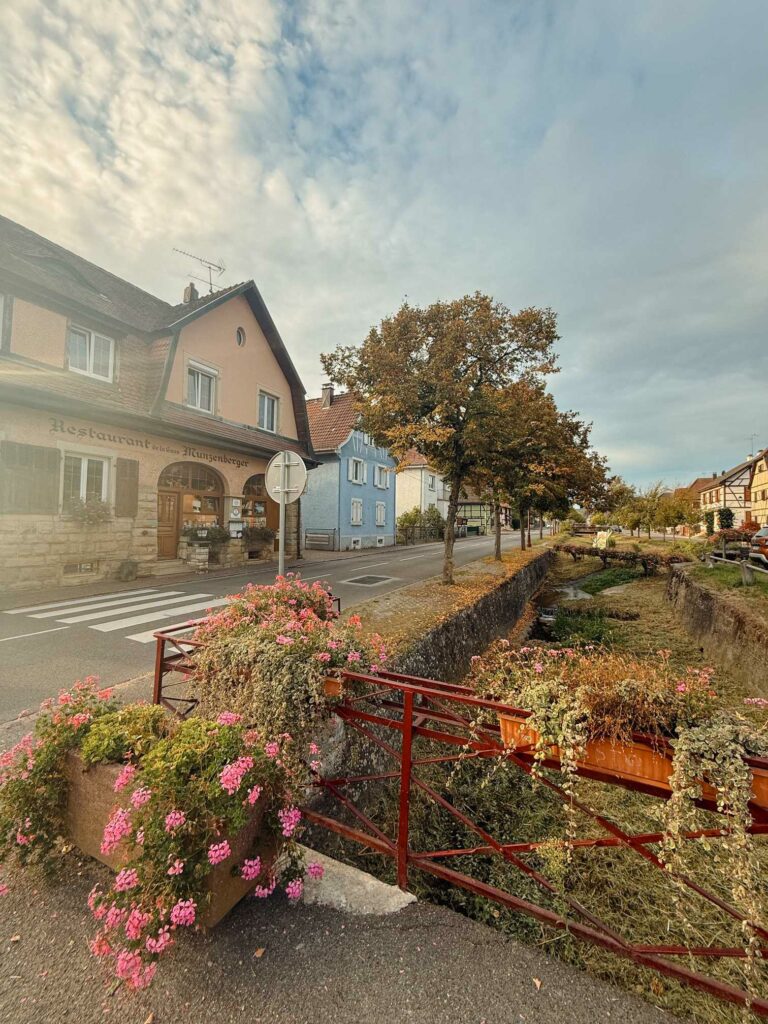
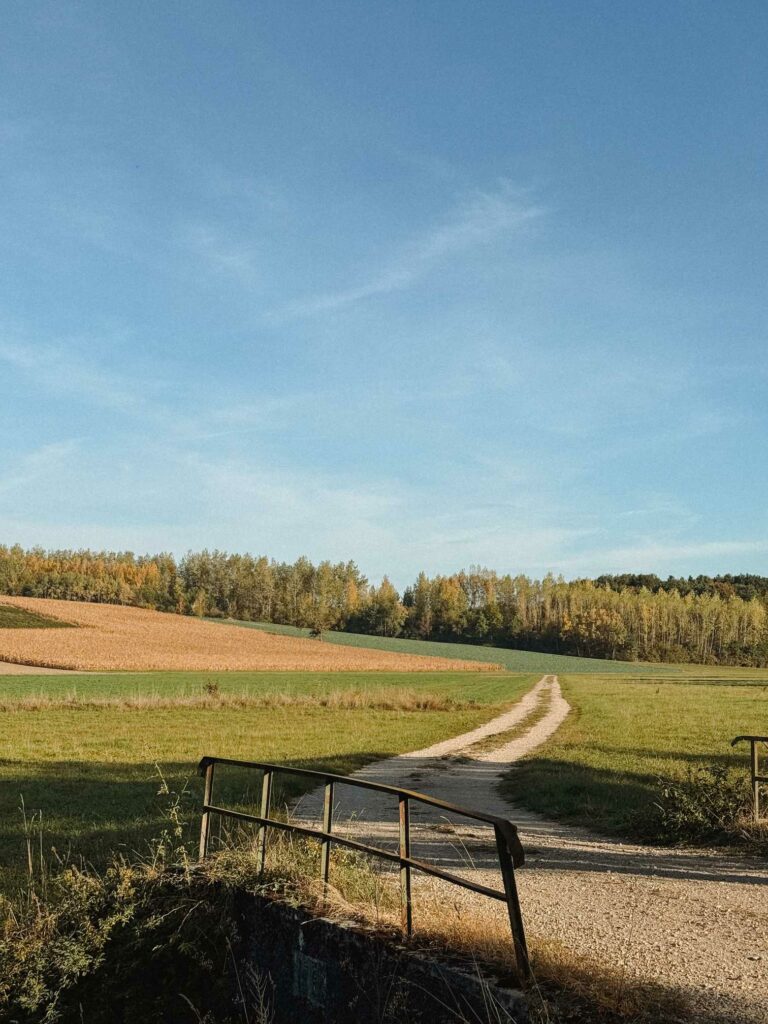
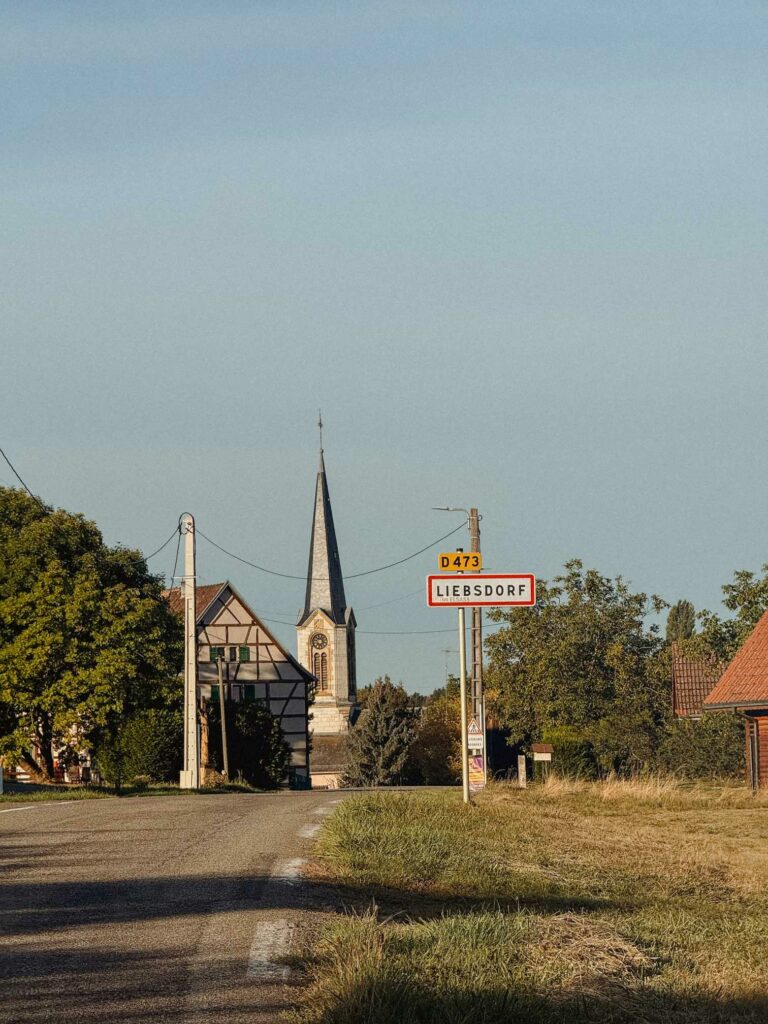
The route at a glance
| Day 1 | Day 2 | |
|---|---|---|
| Stage | Ferrette > Hirsingue | Hirsingue > Ferrette |
| Distance | 90 km | 100 km |
| Elevation gain | 1 417 m | 1 442 m |
| Riding time | 5h30 à 6h | 6h à 6h30 |
| Level | Not technical, but long | Not technical, but long |
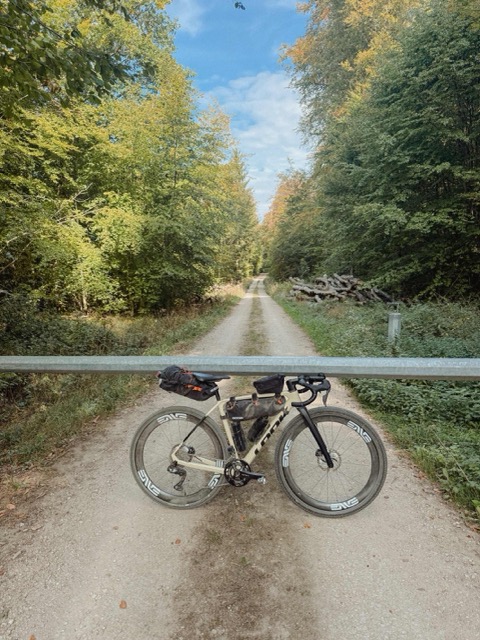
In total: about 190 km and 2,860 m of climbing. Nothing technical, but it’s still two big days in the saddle, especially with bags on the bike. The terrain mixes white gravel tracks, forest roads and quiet country lanes (even the main roads are really calm).
Before you even start: Ferrette Castle
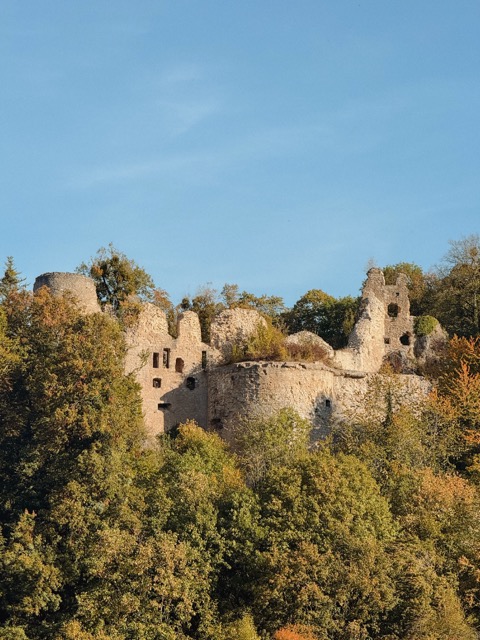
If there’s one thing to do before your first pedal stroke, it’s to head up to Ferrette Castle. The ruins of the old castle of the Counts of Ferrette sit high above the little town, and from up there you get a 360° view of everything that’s waiting for you.
My tip: go the evening before, at sunset. It’s the best way to get into the mood.
Day 1 : Ferrette > Hirsingue (90 km, +1 417 m)
The first few kilometres are on the road, just to get out of Ferrette. Nothing tough, and you quickly switch onto the tracks, heading to the Courtavon lake. It’s really peaceful in the morning, with anglers camped out in their tents all along the shore. The rest of the day alternates between empty country lanes and villages full of half-timbered houses. Not technical at all, but it’s long, so pace yourself.
Morimont Castle, the first dose of history
Pretty soon, you spot the ruins of Morimont Castle from the tracks, between Levoncourt and Oberlarg. As early as 1183, it controlled the upper Largue valley. You can ride up to the entrance, but unfortunately the site is currently closed to the public for works. You can still walk around the ruins and peek through the gates at the huge vaulted cellar.
A little anecdote: it was in these ruins, in 1826, that a group of Jura patriots swore to free their region from Bernese rule. It took more than 150 years for the canton of Jura to finally come into being in Switzerland.
On the way down to Oberlarg, there’s an optional out-and-back to the source of the Largue and its ford.
The source of the Ill
In Winkel, the route goes past the source of the Ill. Along with the Largue (which ends up flowing into it, in Illfurth), it’s one of the two main rivers of the Sundgau. And not just any river: the Ill runs the whole length of Alsace for about 217 km, through Mulhouse and Strasbourg, before joining the Rhine. Seeing the spot where it all begins, in a simple meadow on the edge of the village, is pretty special.
A quick trip into Switzerland and the climb of the weekend
From Kiffis, you cross into Switzerland. And that’s where the longest climb of the two days is waiting: about 300 m of climbing from Kleinlützel up to the Challpass. Not very steep, on a small, shady and very quiet road. Just ride it at your own pace.
Then it’s down to Burg (Burg im Leimental, on the Swiss side), with a superb view of the castle overlooking the village. It dates back to the Middle Ages and people still live in it! Make sure you stop on the way down, the view is really worth it. You stay in Switzerland a little longer before crossing back into France.
Oltingue and its church in the middle of the fields
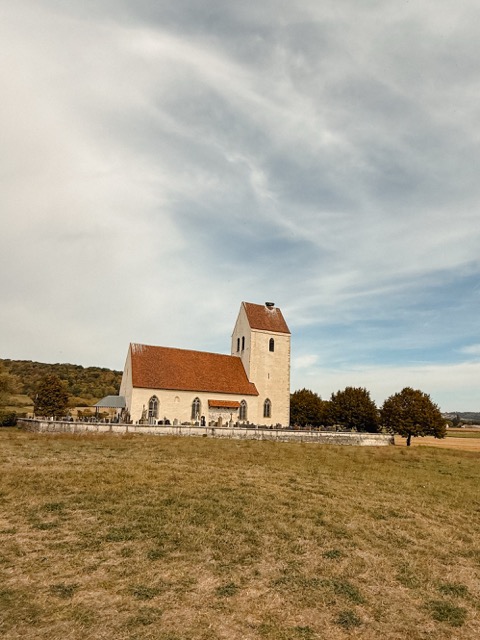
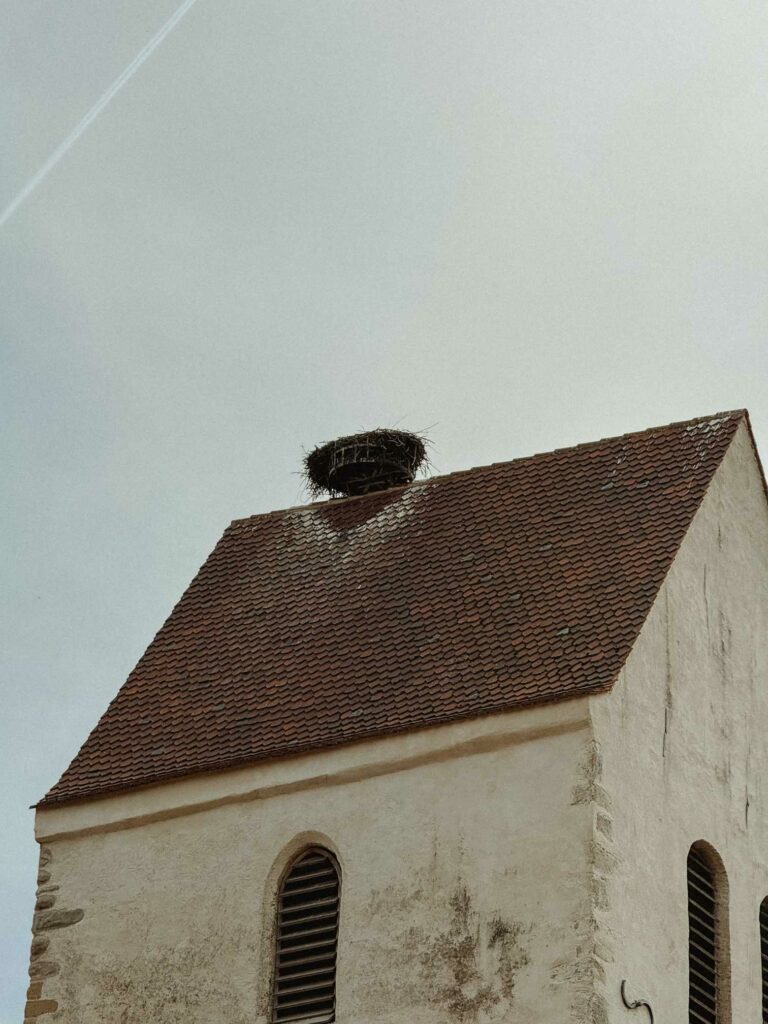
As you arrive in Oltingue, a small road takes you to the Saint-Martin-des-Champs church. It just sits there, right in the middle of the fields, about 500 m from the village, surrounded by its cemetery. Really unusual! It used to be the mother church of Oltingue and several neighbouring villages.
Quick bakery stop in Oltingue to recharge before tackling the end of the stage.
The end of the stage to Hirsingue
The rest flows nicely, with a few short climbs here and there. You ride through more beautiful villages with half-timbered houses, like Bouxwiller, Durmenach and Illtal, then reach Hirsingue on tracks and small roads.
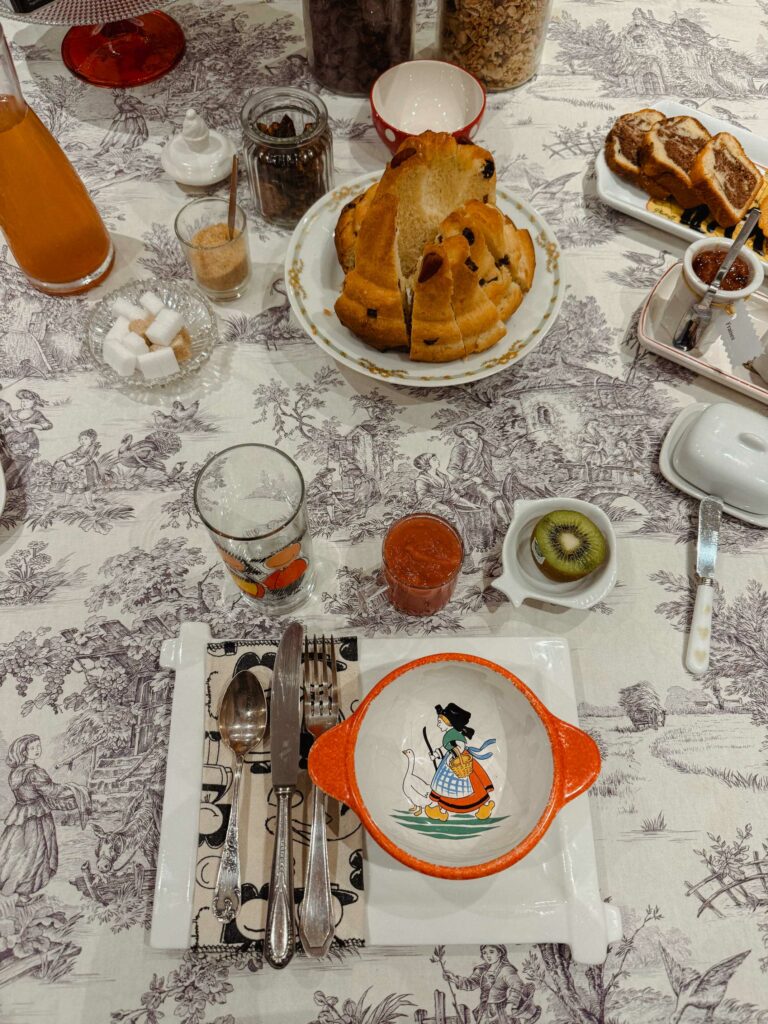
In the evening, a night at the Eichestuba guesthouse and dinner at Le Petit Grain de Sel to refuel before closing the loop the next day (make sure you book ahead).
Day 2 : Hirsingue > Ferrette (100 km, +1 442 m)
Same recipe as the day before: a mix of tracks and typical Alsatian villages. It’s long (count on 6h to 6h30), but still not very technical.
Altkirch and the Roggenberg climb
The day starts in Altkirch, the capital of the Sundgau. Next year, from 24 to 27 June 2027, the town hosts the French National Road Cycling Championships, a first for Alsace. And we already know which climb will decide the road race: the Roggenberg, which the riders will tackle several times. It’s short, but with a section at 18%. I’ll let you imagine what that’s like on a gravel bike with bags… not the easiest moment of the weekend!
On the trail of memory
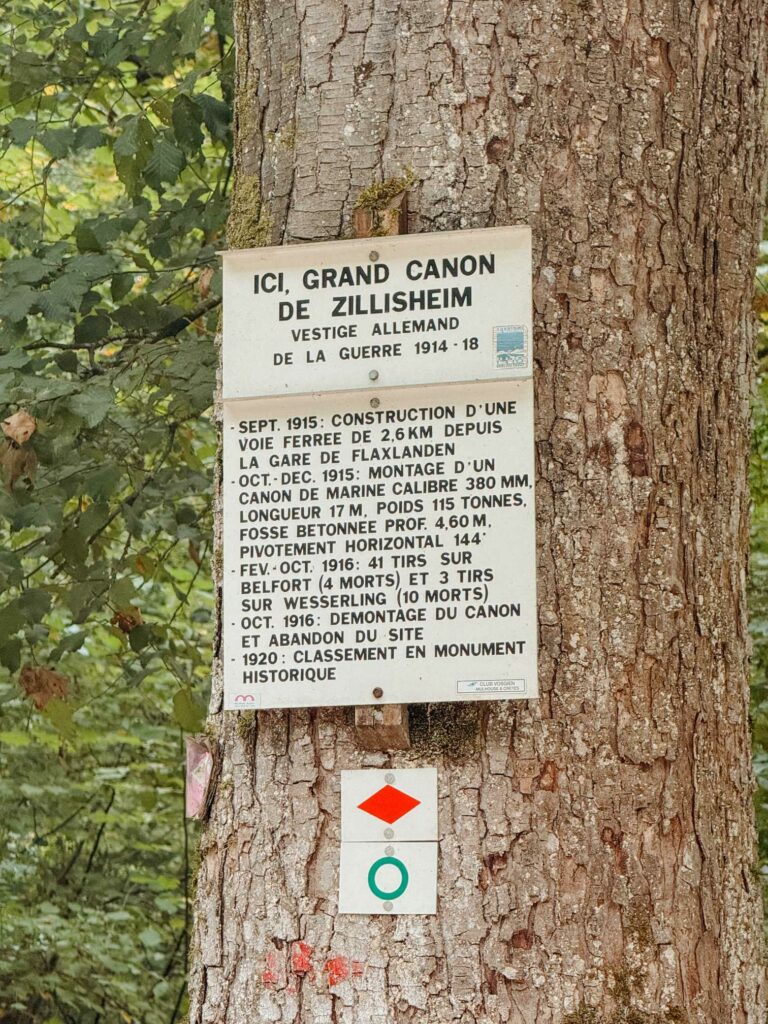
Next, we go back in time. The route follows the traces of the battles of 19 August 1914, at the very start of the First World War. Keep in mind that at the time, Alsace had been German since 1871: these battles were aimed at taking it back. Information panels along the way tell the story of the men who fell here.
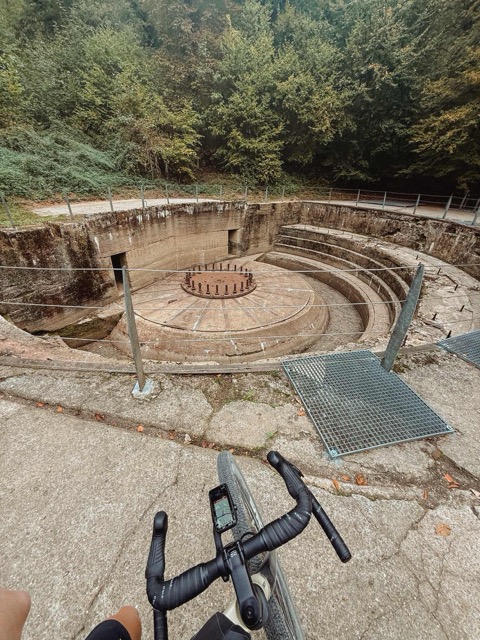
Around Illfurth, you ride through a forest dotted with remains: bunkers, casemates and the site of a huge German cannon. You also pass near the German military cemetery in Illfurth, where Albert Mayer is buried. He is considered the first German soldier to die in the war, on 2 August 1914, before it had even been officially declared.
On this stretch, I felt like I had the world to myself. The tracks are amazing, there’s nobody around, and you’re riding right through all this history. One of my favourite moments of the whole loop.
Villages, a convent and a little harbour
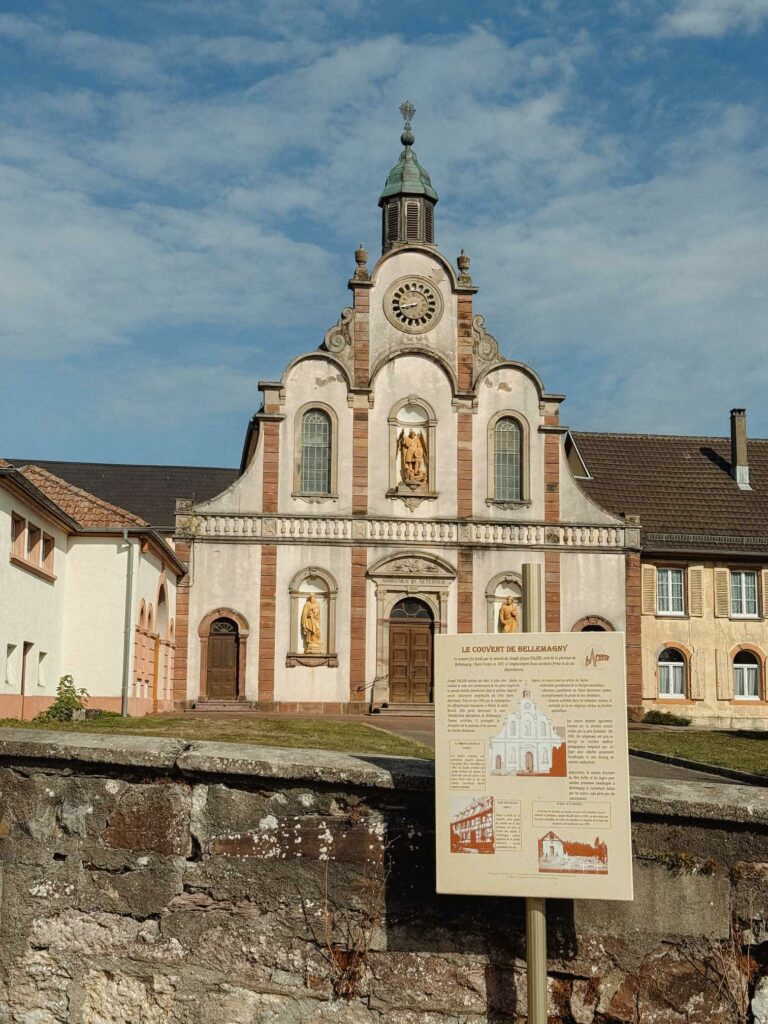
Then comes a string of Alsatian villages, each one prettier than the last, like Bellemagny and its large convent, home of the Benedictine Sisters of Adoration since 1851.
Time to refuel in Dannemarie. As you ride into the village, you follow the Rhône-Rhine Canal and pass its little marina, with an open-air café by the water. It’s completely different from everything you’ve seen so far, and a great spot for a break.
White gravel and the land of ponds
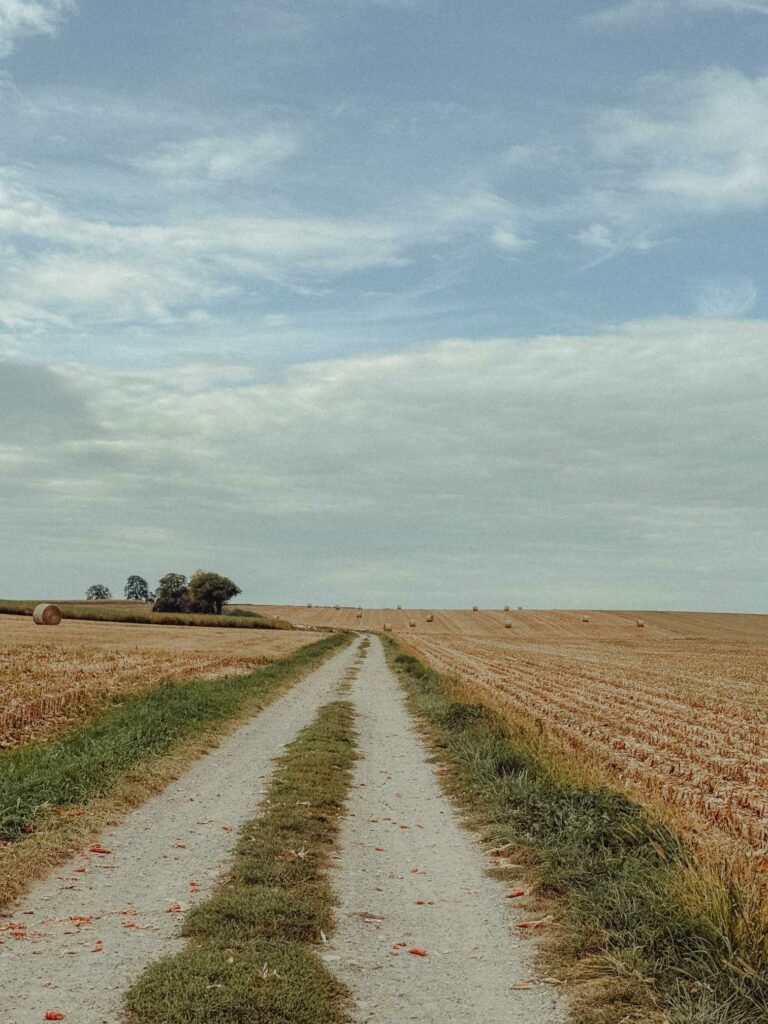
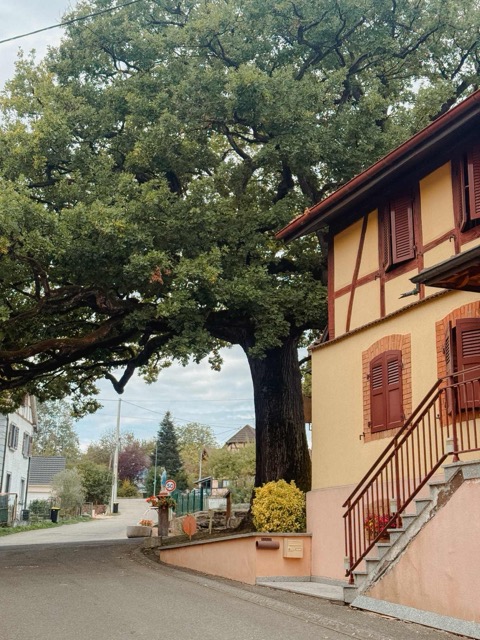
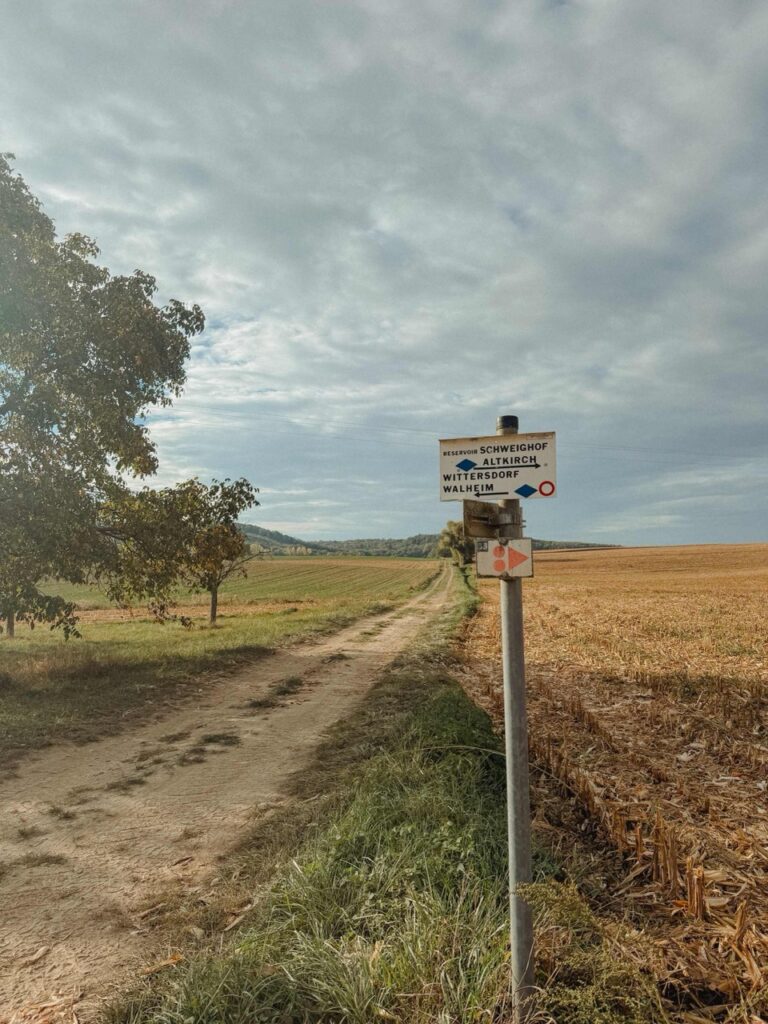
After that, it’s an endless run of white gravel tracks. Proper gravel heaven! Along the way, stop for a photo in Saint-Ulrich in front of its Liberty Oak, planted in 1792 during the French Revolution and listed as a Remarkable Tree of France.
You then cross the heart of the Sundgau, nicknamed the Land of Ponds for its hundreds of ponds and small lakes. That’s actually where the local speciality I’m about to tell you about comes from.
To finish, you follow the foothills of the Jura through Koestlach and Vieux-Ferrette before rolling back into Ferrette. Loop closed!
Pour finir, on longe les contreforts du Jura par Koestlach et Vieux-Ferrette avant de retrouver Ferrette. La boucle est bouclée !
The must-do food stop: fried carp
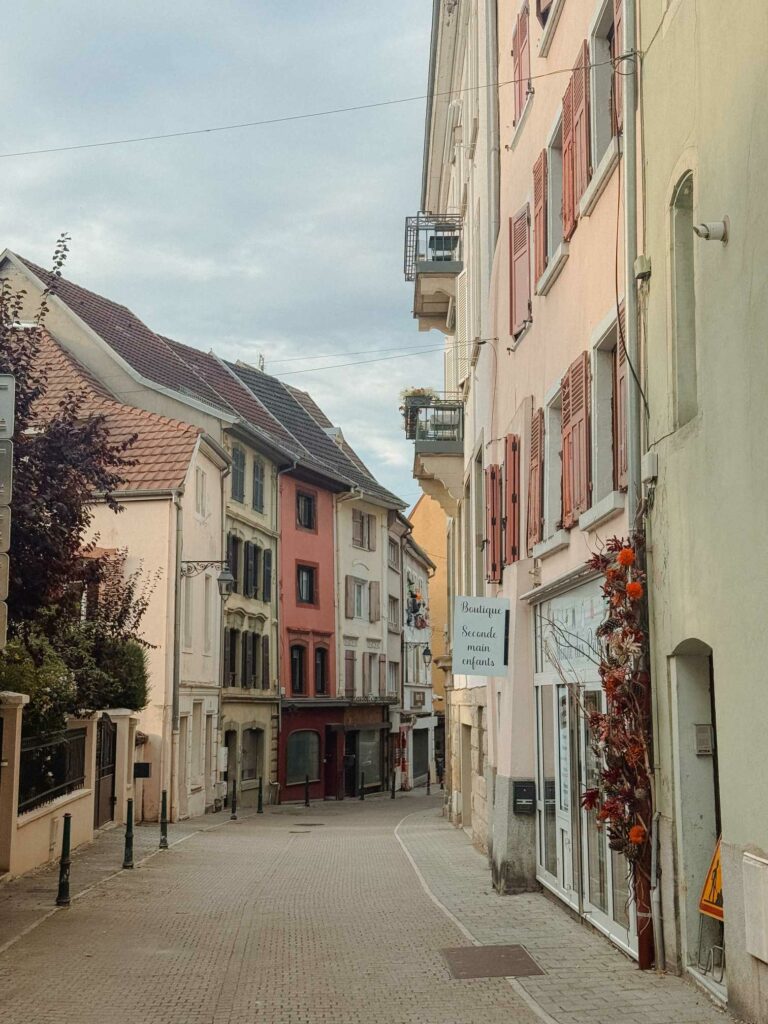
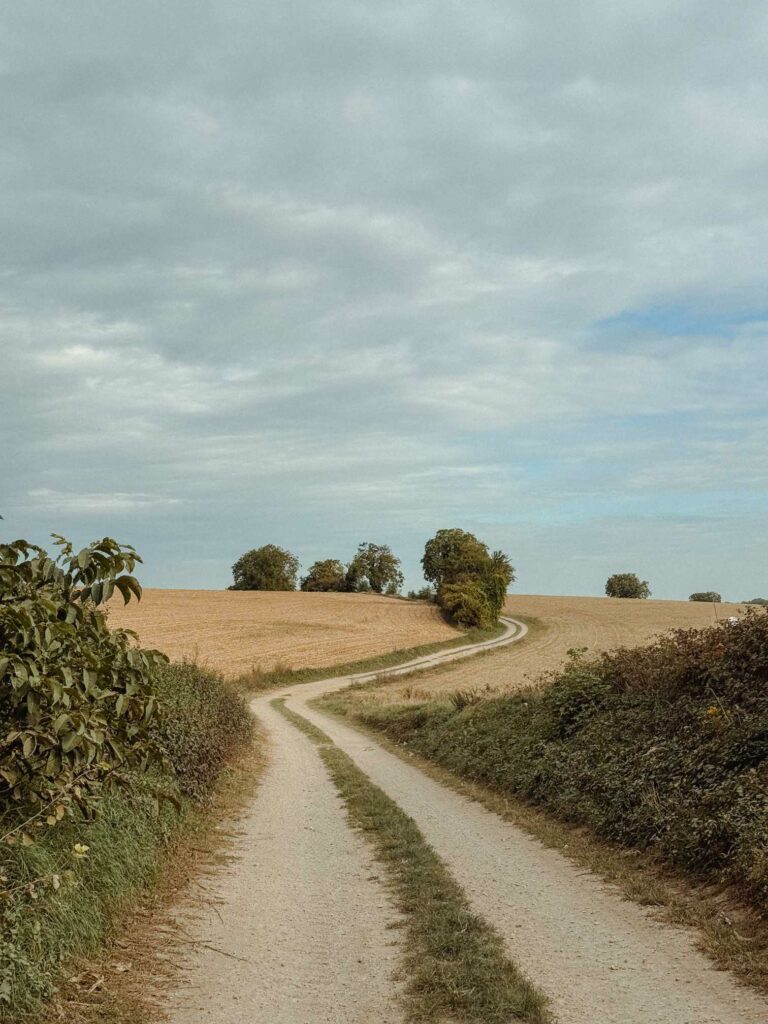
You can’t ride around the Sundgau without trying carpe frite, fried carp. It’s pieces of carp from the local ponds, coated in semolina and deep-fried, served with fries, mayonnaise and salad. And traditionally, you eat it with your fingers! It’s basically the Alsatian version of fish & chips, and after a day on the bike, I promise it’s incredibly comforting.
Practical info
Where to stay in Hirsingue: I spent the night at the Eichestuba guesthouse, a renovated Alsatian house right in the heart of the village. It has the Accueil Vélo label (the French cycle-friendly accommodation label) and a garage to store your bikes. There are only three rooms, so book well in advance.
Where to eat in Hirsingue: Le Petit Grain de Sel, just a short walk away. Home cooking, a small and friendly dining room, perfect for refuelling. Be aware that it isn’t open every evening (closed on Sundays and some weeknights) and there aren’t many tables: call to book before you set off.
The border: you cross into Switzerland on day one, so bring your ID card or passport. And if you plan to stop for a coffee on the Swiss side, it’s best to have a few Swiss francs or a bank card.
Food and water: there are lots of villages, but they’re small. Make the most of bakeries when you find one (Oltingue on day one) and of the canal-side cafés on day two.
GPX tracks:
The Sundgau really surprised me. No big difficulties, no crowds, just beautiful tracks, half-timbered villages and history revealing itself with every pedal stroke. If you’re looking for a gravel weekend a little off the beaten track, go for it!